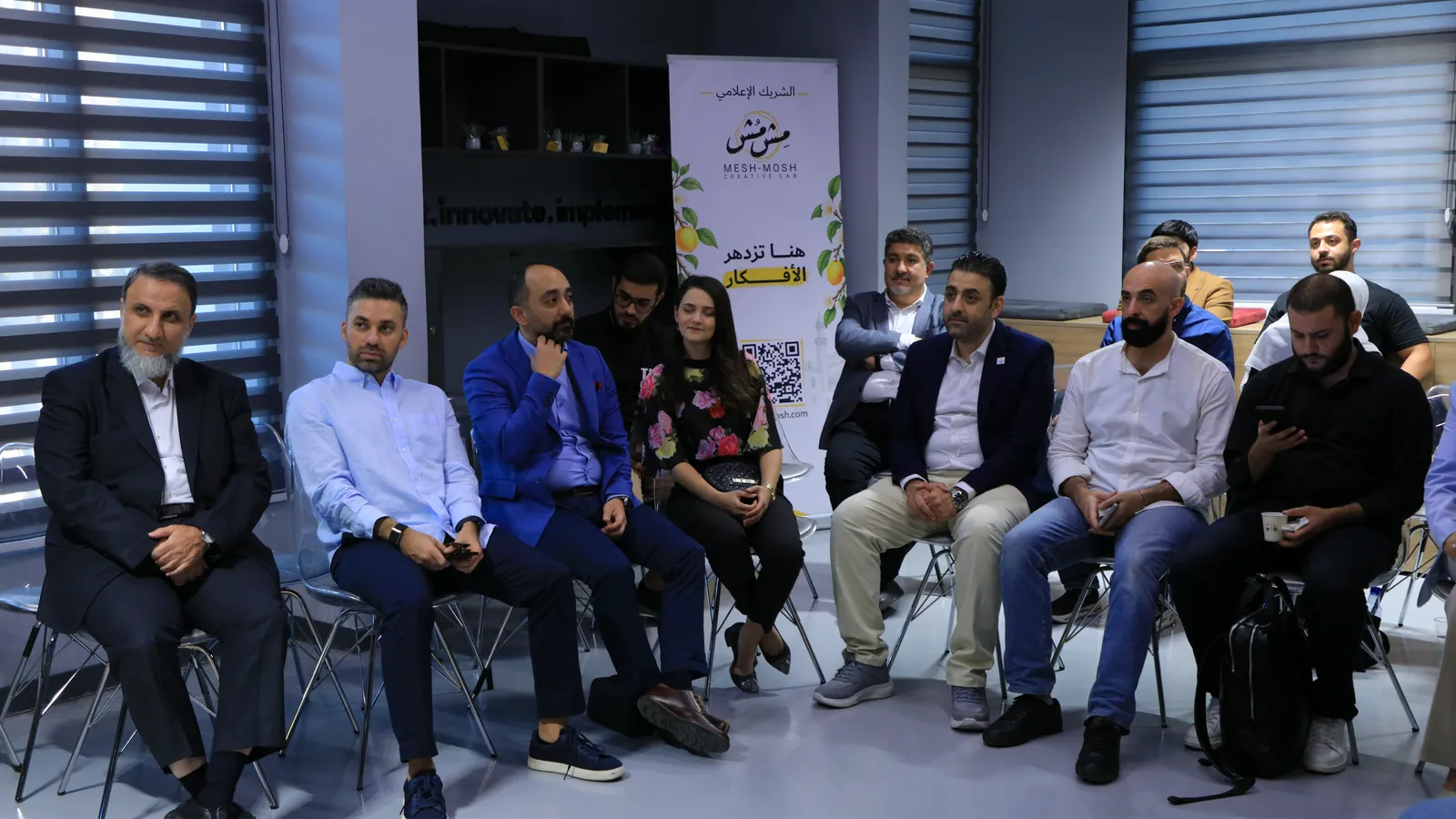
EntreStations launch in Damascus: an evening on trust and company culture
In short
- The Syrian Entrepreneurs Union and DIGIT Center launched EntreStations, a programme for Syrian founders who have started their businesses and now face real market challenges.
- The programme has five tracks: People, Structure, Numbers, Capital and Decisions.
- The pilot phase has eight sessions on Saturdays. The first one is on 17 October 2026.
- The panel talked about trust and company culture with Dr. Mohammad Qawwas and Hasan Fallaha. Ahmad Nahas moderated.
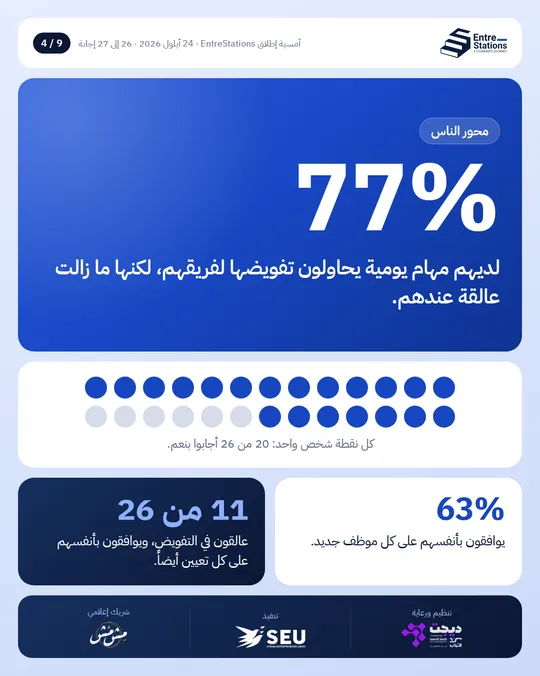
- In a live poll with 41 people in the room, 77% said they have tasks they are trying to hand over to their team, but the tasks are still stuck with them.
What is EntreStations?
EntreStations is a programme for Syrian founders who have started their businesses and face real market challenges. It was launched by the Association of Syrian Entrepreneurs, known as the Syrian Entrepreneurs Union (SEU), together with DIGIT Center in Damascus.
The programme has five separate tracks: People, Structure, Numbers, Capital and Decisions. Each founder picks the track they need, and nobody has to go through all of them. It is not a training course with a fixed plan. It is a series of sessions that bring founders together with experts from the market, and the topics come from problems that founders raised themselves in many meetings before the launch.
Learn about the programme and register (Arabic)How did the evening go?
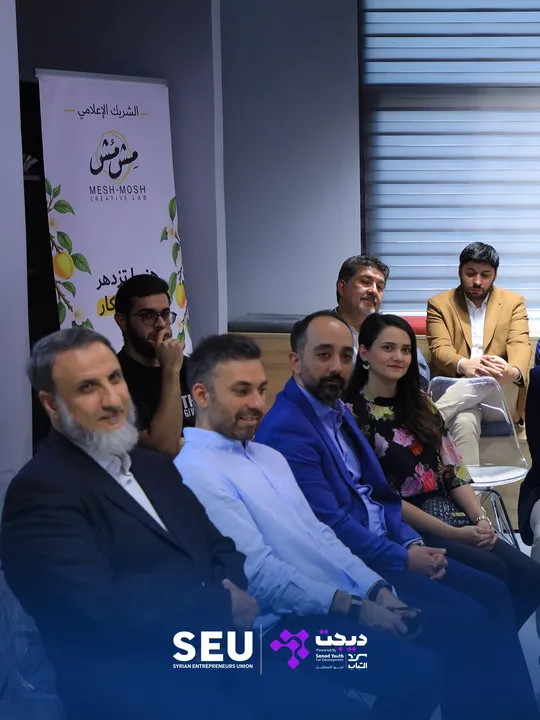
The evening was by invitation only. It took place on Thursday 24 September 2026 at DIGIT Center and brought together founders, experts and partners from Syria’s startup scene. The programme ran in this order:
- 01
Opening
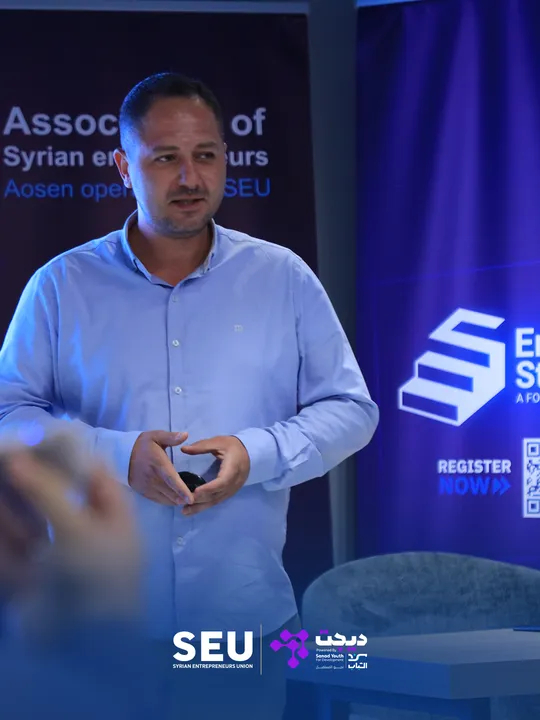
Dr. Saeed Abu Tourab, director of DIGIT Center, welcomed the guests. He presented the centre as a space that helps young people enter the job market and start their own businesses, and called it a centre for partnerships.
- 02
About the Union
Hasan Queder, chairman of the Union, told how the Union started in 2025 from meetings where founders shared their problems. He presented its work: networking, building founders’ skills, following up with government on the laws that affect founders, and introducing companies that are ready to investors.
- 03
The problem on the ground
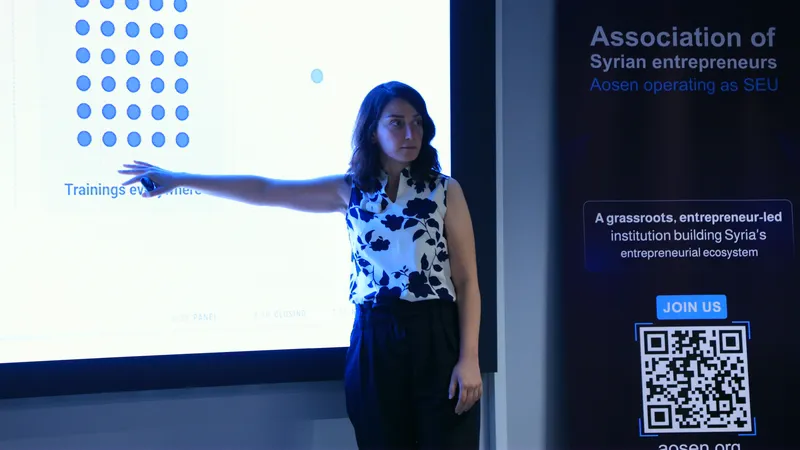
Sara Qataf, board member of the Union and an adviser to startup owners, shared the questions founders face after they start: Do I stay on as CEO, or hand the management to someone else? How do I protect my rights with my partner? What happens after I get investment? She then asked the room: what percentage of people with an idea actually act on it? The room settled on about 1%, a guess, not a statistic.
- 04
The five tracks
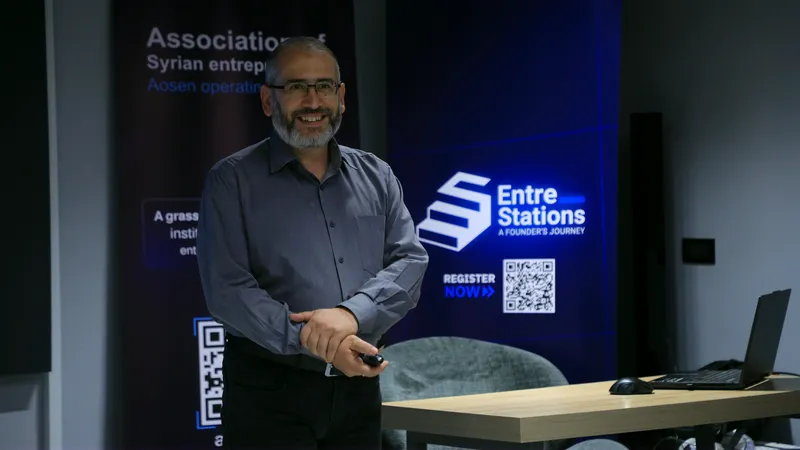
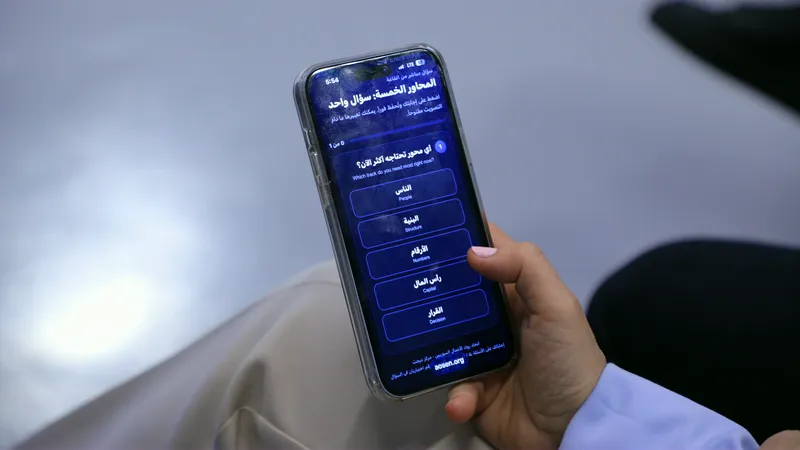
Ahmad Nahas, the Union’s secretary general, explained how founders’ problems were collected and grouped into five tracks. People voted on each track’s questions from their phones, and the results showed on the screen right away.
- 05
How the programme works
Dr. Saeed Abu Tourab compared the programme to a train network: stations on different lines that cross each other, with each station suited to a certain stage. Each founder picks the station that fits them, instead of one course that everyone goes through and leaves with the same knowledge.
- 06
The panel
“Trust and company culture”, then questions from the audience. The evening ended with time to meet and network.
Trust and company culture
Dr. Mohammad Qawwas and Hasan Fallaha took part, and Ahmad Nahas moderated. These are the main ideas.
Dr. Mohammad Qawwas
Member of DIGIT Center’s board of trustees, CTO of the Mydawa Africa group, and CEO of Kuality AI in the UAE
Hasan Fallaha
Head of the development department at the United Nations
Ahmad Nahas
Secretary General of the Association of Syrian Entrepreneurs, co-founder of the Mesh-Mosh agency, and author of the book “Harbuk”
Why do tasks stay stuck with the founder?
The talk started from a number on the screen: more than three quarters of the room (77%) said they have tasks they are trying to hand over to their team, but the tasks are still stuck with them. Dr. Qawwas said the problem is not only about trust. It is also fear for the company, and not enough experience in moving from a founder who works alone to a team leader. He noted that many Syrian companies stop halfway, not because of the market, but because the founder did not learn the next step. Earlier in his talk, Ahmad Nahas had described holding on to every detail as a leftover from an old way of managing, where the business owner knows everything himself. That way no longer fits today, when work needs many different skills.
Is trust given or earned?
Hasan Fallaha said trust has more than one side: trust in a person’s skills, and trust in their honesty with money and decisions. It is built from both sides. The employee has to show what they can do, and the founder has the bigger role in finding the team’s strengths and managing them. He added that letting go of a task is not a loss. It is a gain that frees the founder for a bigger role.
A system, or adapting?
The restaurant example led to the liveliest debate. Hasan Fallaha said the most important stage for a founder is building the company so that its system runs on its own. Then the founder can leave the details and move to the next stage, as happens in a restaurant whose business model has settled. Obada Al-Lahham, a founder in the audience, disagreed. He said a young startup does not build a fixed system at first. It adapts to the market and may change its business model, and the system comes later. Fallaha closed by saying that the restaurant’s path is fairly stable, while a startup’s path keeps changing.
Who decides between partners?
Dr. Qawwas was asked: should a company have one person with the final say? He answered that the problem starts on day one. A founder picks a partner for a specific reason, such as a gap in sales, tech or marketing. When a dispute over who decides what shows up later, the fault is often in how the partner was chosen in the first place.
When does company culture start?
Ahmad Nahas asked: is company culture only for big companies, or does it start on day one? Fallaha said it is made from the first moment, in the way the founder and the team deal with each other every day, even in a small project. Dr. Qawwas said culture takes shape with the first group that joins the company, then gets more complex at each stage of growth. He gave an example: a salesperson brings the company a million dollars, but breaks the value of respect that the company stands for. Fallaha answered that some things can be let go, but some red lines cannot be crossed, even for the million.
A question from the room: where is the talent?
Tarek Ammar, founder of a game development studio in Syria, asked how hard it is to find talent and keep it. His team trained a number of applicants, and in the end only a few stayed. Dr. Qawwas answered that the market has just come out of its hardest stage, that the people who stayed are the founders who built everything with their own hands, and that it will take time for experienced people to come back.
What did the room say, in numbers?
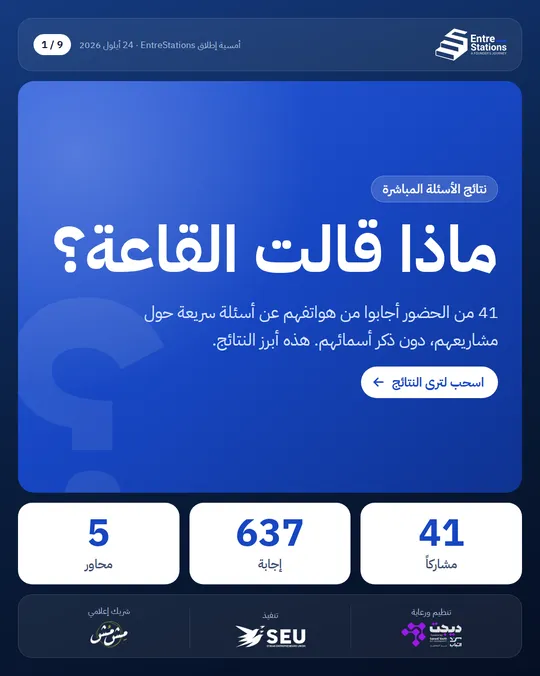
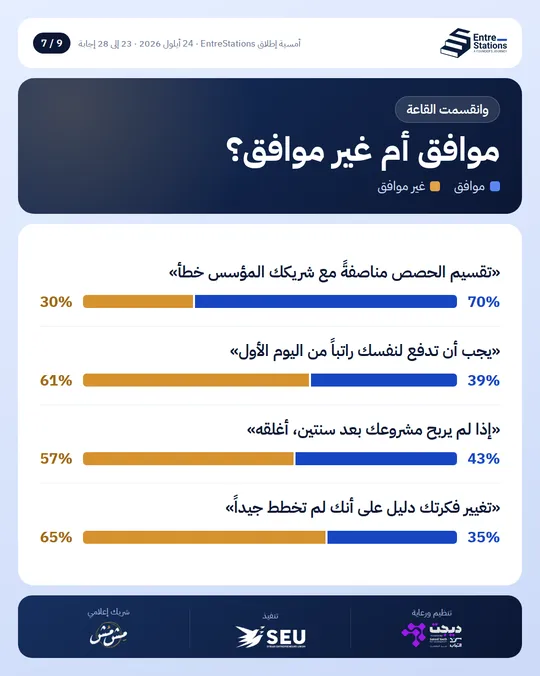
During the presentation, people voted from their phones on each track’s questions, without giving their names. 41 people took part, and 18 of them answered the questions for all five tracks.
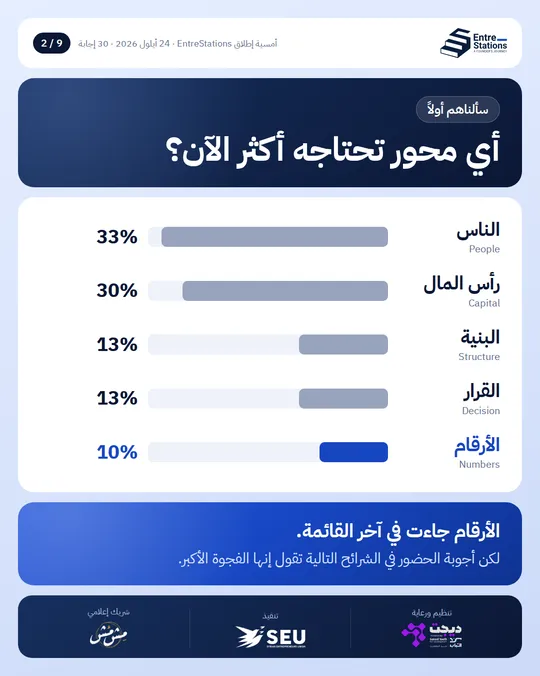
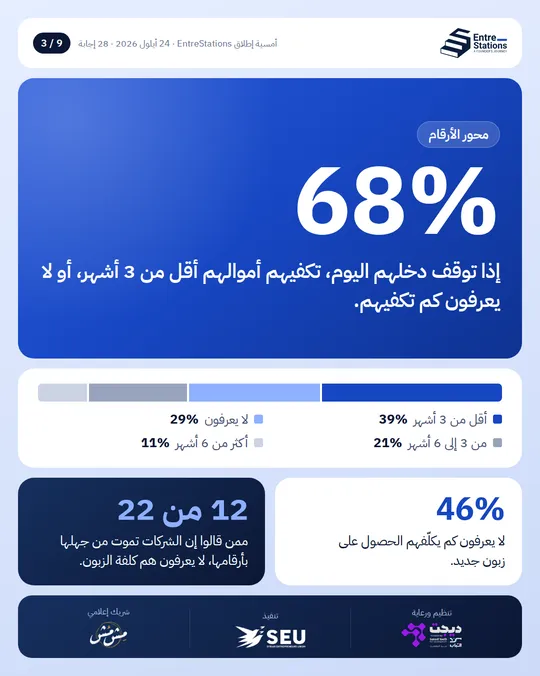
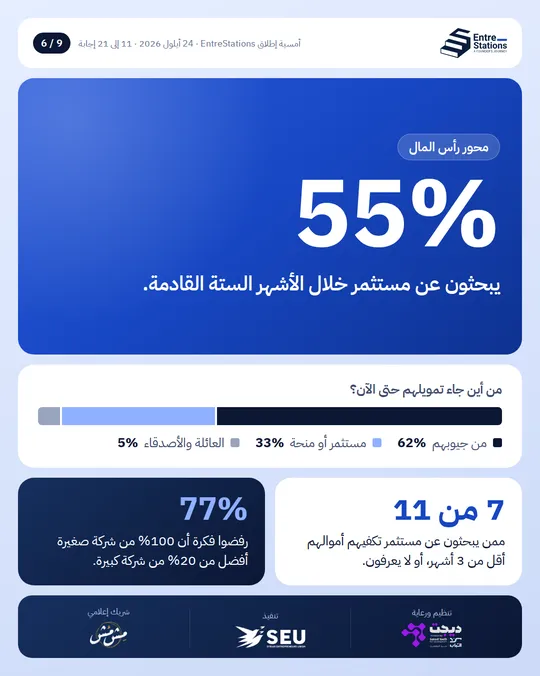
What stands out: Numbers was the track people asked for least, yet it showed the clearest gap in their answers. Almost half do not know what a new customer costs them, and more than two thirds have money for less than three months, or do not know how long it would last.
| Question | Result |
|---|---|
| Which track do you need most right now? | People 33% · Capital 30% · Structure 13% · Decisions 13% · Numbers 10% |
| Do you have tasks you are trying to hand over to your team that are still stuck with you? | Yes 77% |
| Are you the one who approves every new hire? | Yes 63% |
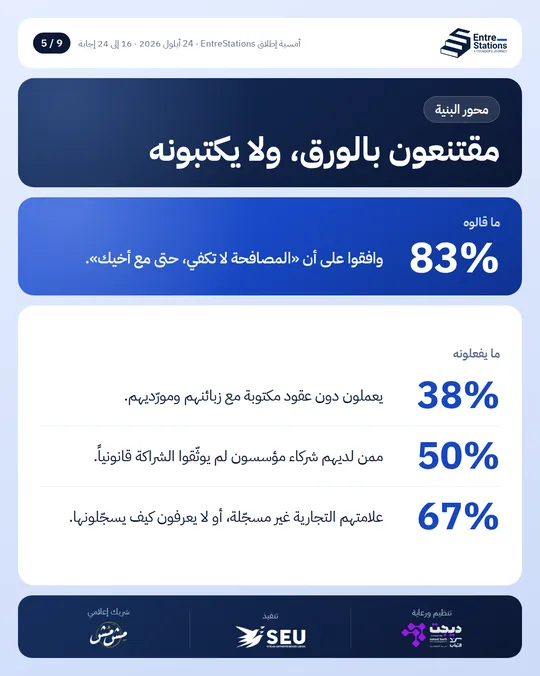
| Do you have co-founders? | Yes 62%, and half of them have not made the partnership legal on paper |
| “A handshake is not enough, even with your brother” | Agree 83% |
| Is your company officially registered? | Registered 32% · Started the process 16% · Not yet 52% |
| Do you know what a new customer costs you? | Exact number 32% · Roughly 21% · No 46% |
| If your income stopped today, how many months would your money last? | Less than 3 months 39% · Don’t know 29% |
| “Companies don’t die from lack of money, but from not knowing their numbers” | Agree 79% |
About these numbers: 41 people voted at an invitation-only evening, and not all of them are founders. The results show the trends in the room. They do not represent all founders in Syria.
Voices from the evening
On the side of the evening, we asked some of the guests: what does a Syrian founder need today? And what advice do they wish they had heard when they started?
- Sara Qataf, adviser to startup owners: Before you build or spend, ask ten people from your target group about your idea.
- Maya Shikhani, general manager of Boustaji: Think about all five years of setting up the company, not just the first year.
- Rami Hamada, public relations consultant: Founders need places like this one that give them a starting point.
- Mohammad Shayah, CEO of Forsa: Things are changing. A founder should build on what people will need in the future, not on old ideas.
- Mujahed Akeel, founder of Beyond Ventures: The real problem is that founders cannot easily reach the advisers and mentors who could help them.
- Ahmad Jlelati: We don’t need training alone. We need follow-up after it, and mentors who stay with the projects.
- Mohammad Fallioun, game developer: Struggling to hand tasks over to the team is what stops many startups from growing.
- Dr. Ahmad Hallak: Reading and analysing numbers is what a founder needs most.
What did we learn from the evening?
- Moving from a founder who does everything to a team leader is not only about trust. It is a skill you build with experience.
- Trust is built from both sides, and trust in someone’s skills is not the same as trust in their honesty.
- There is no single answer to “a system, or adapting?”. The answer changes with the company’s stage.
- Company culture starts with the first employee, and its clearest test is the moment money clashes with values.
- The biggest gap in the room was in numbers, even though it was what people asked for least.
Next session: Saturday 17 October
The EntreStations pilot phase has eight sessions on Saturdays, from 4 to 6 pm at DIGIT Center in Damascus. The first session is on Saturday 17 October 2026, with founders from the market. Sessions are held in Arabic.
Thanks to our partners
We thank the partners who made this evening possible, the panel guests, and everyone who joined in with a question or an opinion.
DIGIT Center
An innovation centre in Damascus. It hosts the programme and its sessions.
digit-sy.com → Sponsor and partnerSanad Youth
Sanad Youth Development Foundation, a partner in supporting young founders.
Sanad on LinkedIn → Media partnerMesh-Mosh
A creative agency in Damascus, and the team behind the evening’s video coverage.
mesh-mosh.com →Follow the Union: Follow the Syrian Entrepreneurs Union’s news and upcoming sessions on LinkedIn and Facebook, or join the Union. Sessions are free during the pilot phase until the end of 2026.
Common questions
Short answers about the programme, where the sessions take place, and what they cost.
What is EntreStations?
A programme for Syrian founders who have started their businesses. It has five tracks: People, Structure, Numbers, Capital and Decisions. Each participant picks the track they need.
Who runs the programme?
The Association of Syrian Entrepreneurs (Syrian Entrepreneurs Union) and DIGIT Center, with support from Sanad Youth, and Mesh-Mosh as media partner.
Where and when are the sessions?
Every Saturday from 4 to 6 pm at DIGIT Center in Kafarsouseh, Damascus. Sessions are in person only, with no live stream, and they are held in Arabic.
How much does a session cost?
$10 per session, and $5 for Union members and Sanad members. You pay in cash at DIGIT Center.
When is the next session?
Saturday 17 October 2026, from 4 to 6 pm at DIGIT Center.