Where does investment go in, and where do founders stand? A reading of the 2025-2026 investment report
In short
- Aram Lab and Riyada+ published the Syrian Startup Ecosystem Investment Report 2025-2026. It records 14 investment deals across nine sectors.
- Verified amounts total $581,000 across six deals. 13 of the 14 rounds were pre-seed, and no venture capital fund led any of them.
- I set the report against our Entrepreneurship Observatory: 66% of project owners in our data are looking for partners or investors, and 99% ask for networking.
- Founders, or team members, of six of the 14 companies in the report have taken part in activities of SEU and its partners. Three of them received about 80% of the verified capital.
- My takeaway: investors now pay before profit, but the second round is still a wall, and the road to money still runs through relationships and evidence.
investment deals recorded, 2025 to September 2026
across six deals
rounds were pre-seed
rounds led by a venture capital fund
Source: Aram Lab and Riyada+ report, 2026
When money is counted, not promises
In my book Harbuk I wrote, half joking and half bitter, that the golden rule of the Syrian school of funding was: "Don't dream of seeing a single penny before your project turns a profit." So when I read the Syrian Startup Ecosystem Investment Report 2025-2026, I was looking for one answer. Has that rule changed?
The report was produced by Aram Lab, an ecosystem consultancy based in Germany, with the media platform Riyada+, and it covers 2025 to September 2026. It is built on interviews with angel investors and with founders who raised money, and every deal is checked before it is counted. That detail matters. Too many investment promises in our market were made at evening events and never reached anyone's account.
The report records 14 investment deals across nine sectors, including health tech, e-commerce, agriculture, education and financial services. Verified amounts total $581,000 across six deals, from $16,000 to $200,000, plus $240,000 confirmed by one side in two more deals. Most of the money came from angel investors, alone or in groups, many of them Syrians living abroad. This is diaspora capital coming back, not as factories and real estate this time, but as small tickets for young teams.
Why are these numbers smaller than the ones in the news?
You may have read about Labby's $10 million round. The report shows it separately for two reasons. The first is size: it is about 17 times all the verified amounts combined, so adding it would make up 92% of the total and hide every other pattern. The second is method: the report separates three levels, an amount its researchers verified, an amount one side confirmed to them, and an amount reported in the media, and it adds up the first level only. That is why its numbers are smaller than the ones in the news, and they are the numbers I use here.
What do investors look for?
The report has one chapter on investors and one on founders. Four messages come up again and again, and I know each of them from the other side of the table:
- 01
The team before the idea
Investors put the team and its ability to deliver first. One of them gives the team about 65% of the weight in his decision.
- 02
A working product, not a pitch deck
Rounds moved faster when investors could see a working product, real customers and real orders. Founders said a pitch deck alone was not enough.
- 03
A local problem with a wider market
Investors prefer a company that solves a clear Syrian problem and has a path to customers outside Syria. They warn against comparing Syrian startups with Gulf valuations.
- 04
Trust when data is scarce
With little reliable market data, investors found most deals through WhatsApp groups, referrals and personal networks, and relied on openness and their own checks.
One of those investors is my colleague Abdulla Shamma, Vice Chair of the association's board. Together with Rani Abu Shaar, he co-led the $100,000 seed round in the classifieds platform Al-Mukhtar, the only seed-stage round among the 14. In the report Abdulla describes himself as an ecosystem supporter as much as an investor, and he names follow-on funding as the biggest challenge: even a company that raises enough for a year or two finds few options for its next round inside Syria.
In the way deals get done, I saw the hajji culture coming back through a door I did not expect. Investors find deals through people they know. Money sometimes travels through exchange offices or in cash, and a screenshot confirms it arrived. Because Syrian law does not recognise some common instruments such as the SAFE, many companies set up a legal entity outside Syria so investors can invest. The team and the market stay in Syria; the company that owns them lives somewhere else. Temporary workarounds are turning into permanent structures.
So has the Syrian school of funding changed? Half the answer is yes: 13 of the 14 rounds were pre-seed, which means investors now pay before profit, and sometimes before the product is finished. The other half is no: no venture capital fund led a single round, and the big wall is still standing. It is the second round. The market can fund the first step today. It does not yet know how to fund the next one.
The missing piece: where do founders stand?
The report counts money. Our Observatory counts people. The distance between the two is where we work. In the first edition of the Entrepreneurship Observatory we read data from 338 entrepreneurs with active ventures. Put their numbers next to the report, and this is what you see:
| What the report found | Where founders stand in our Observatory | What it means |
|---|---|---|
| Only 14 deals in less than two years | 66% are looking for partners or investors | Demand for capital is far larger than supply. |
| Investors ask for evidence: customers, sales and numbers | 76% sell through social media, and only 2% through online marketplaces | The sales are real, but hard to prove to someone who wants numbers. |
| Deals came through networks and referrals | 99% ask for networking | Today the road to an investor runs through relationships. |
| Investors prefer a market wider than Syria | 71% want visibility and regional expansion | The ambition is there, but the legal and financial set-up for growth is still missing. |
The clearest message in the table: demand for capital is high and supply is low. Two thirds of project owners in our data are looking for partners or investors, while the report found only 14 deals.
The second: many ventures already sell, but through channels that are hard to document, and investors look for evidence. I know this problem well. For years I watched traders abandon electronic systems, and even their ledgers, out of fear of security raids, so their sales were real but left no written trace. The reasons are different today. The result looks much the same. So the first thing a founder may need before meeting an investor is to turn sales into numbers they can show.
The report also notes that women founders face extra barriers to funding and networks. In our data, women are 36% of the entrepreneurial community, but only 23% of owners of active ventures.
Where are we in these deals?
We compared the names of the companies in the report, and of their founders, with the records of our activities. This is what we found:
Founders, or team members, of six of the 14 companies in the report have taken part in activities of SEU and its partners. Three of them received about 80% of the verified capital.
Four of these companies took part in our activities before closing their rounds. I am not claiming the association made these investments happen. The credit belongs to the founders and to the people who believed in them. But I read two things in that number: the road to an investor still runs through relationships, and a large share of the founders who reach capital today pass through the same community.
I have long criticised support organisations that tell young people: "Start your project, prove it works, then we will find you the right funding." They widen people's circles but never open a road to money. I do not want our association to repeat that, or to become another closed club. Our job is to open that road to people outside these circles too.
We work on the distance between founders and investors
We bring founders and investors together at meetups and Demo Days, prepare founders for that meeting in the EntreStations programme and its capital pillar, introduce investors to ventures that match their interests, and publish what we learn in the Entrepreneurship Observatory.
Read the full report
I thank Aram Lab and Riyada+ for this work. The report asks founders and investors to share their data so future editions can be more accurate, and I add my voice to that call. Honest records of Syrian startups are still rare.
Syrian Startup Ecosystem Investment Report 2025-2026
By Aram Lab and Riyada+. Available on the Aram Lab website after a short form.
aramlab.info → Our dataEntrepreneurship Observatory
Data from 338 entrepreneurs with active ventures: how they sell, what holds them back, and what they need.
Open the Observatory → For founders and investorsAccess to finance
How we introduce founders to investors, prepare them for the meeting, and refer them to the right partner.
Learn more →About these numbers: investment figures come from the Aram Lab and Riyada+ report (2026), published under a CC BY 4.0 licence, and refer to verified amounts unless stated otherwise. Founder figures come from the first edition of the Entrepreneurship Observatory (October 2026); the shares looking for partners or investors and asking for networking come from the membership form. We found the overlap with the deals by comparing the names of the companies and their founders with registration records from activities of the association and its partners and from the membership form. We do not publish company names. For transparency: the author is the association's Secretary General, one of the six companies was co-founded by a member of its board, and Abdulla Shamma, mentioned above, is its Vice Chair.
Frequently asked questions
Short answers about the report and its numbers.
What is the Syrian Startup Ecosystem Investment Report 2025-2026?
A report by Aram Lab and the media platform Riyada+ on investment deals in Syrian startups between 2025 and September 2026. Every deal is checked before it is counted, and the report includes interviews with angel investors and founders.
How much verified investment went into Syrian startups?
According to the report, $581,000 across six deals, out of 14 recorded deals. On top of that, $240,000 was confirmed by one side, and a $10 million round was reported in the media but not confirmed by either side, so the report shows it separately.
Who invests in Syrian startups today?
Mostly angel investors, alone or in groups, many of them Syrians living abroad. They funded 11 of the 14 deals, and no venture capital fund led any round.
What do investors look for in Syrian startups?
A team that can deliver, a working product with real customers, a clear local problem with a path to wider markets, and openness about ownership and numbers.
Where can I read the full report?
On the Aram Lab website, after filling in a short form. aramlab.info
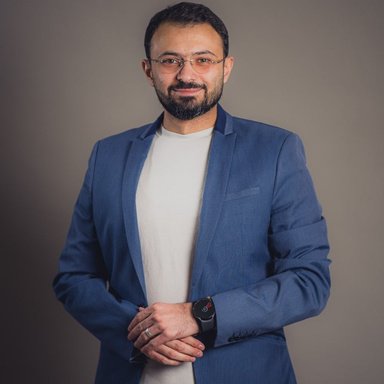
Ahmad Nahas
Secretary General of the Association of Syrian Entrepreneurs and co-founder of the agency Mesh-Mosh. He founded Harbuk, Syria's first integrated e-commerce platform, and documented the experience in his book Harbuk: A startup in the world's most volatile market.
More about the author