Hand over the result and step back
You set a clear goal, leave the method to your team, and check in after a while.
- What it gives
- Your time, and a team that learns to decide on its own.
- What it can cost
- Mistakes you may pay for before you see them.
With Amir Khammash and Laith Al-Rikabi, moderated by Ahmad Nahas
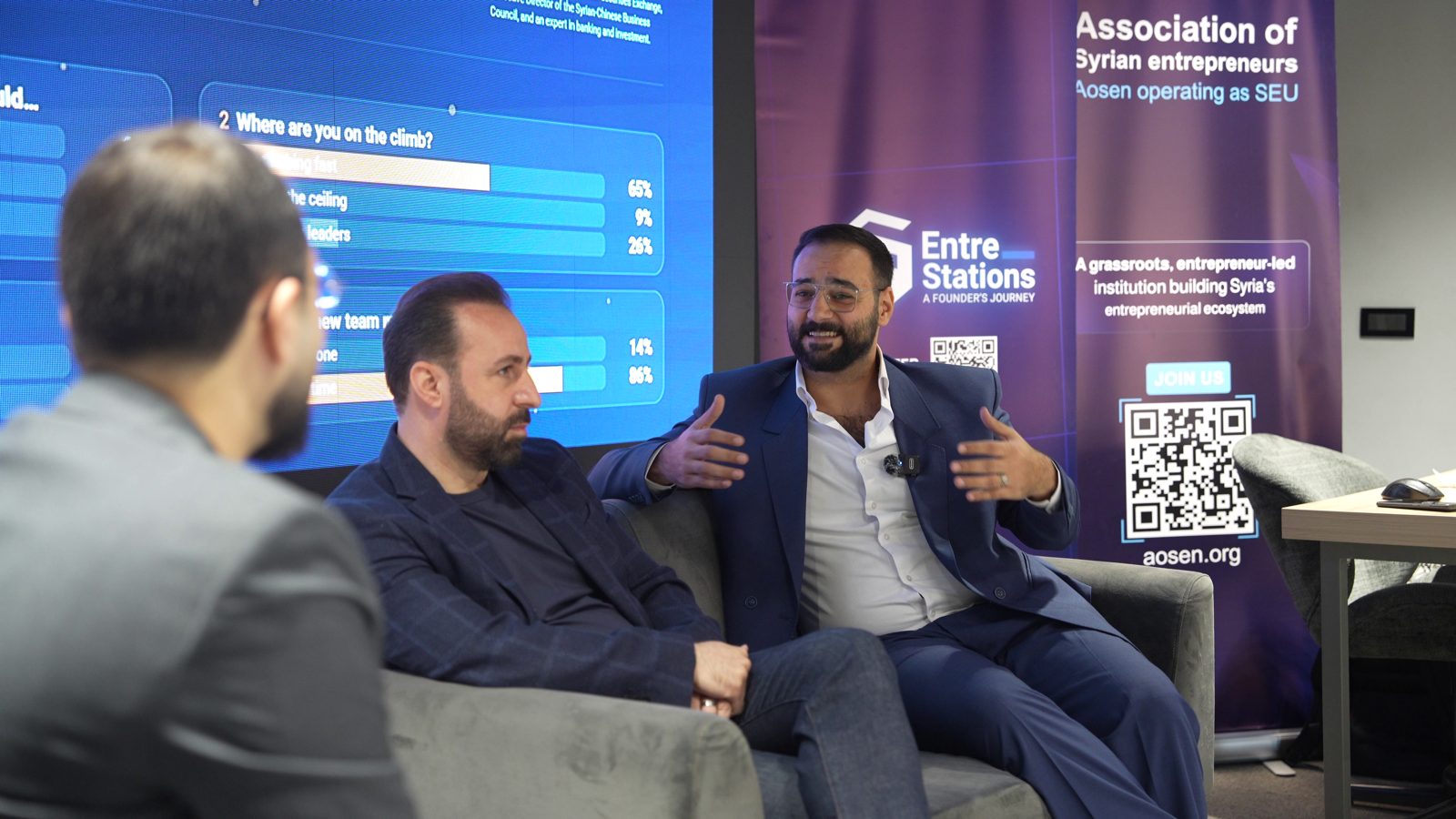
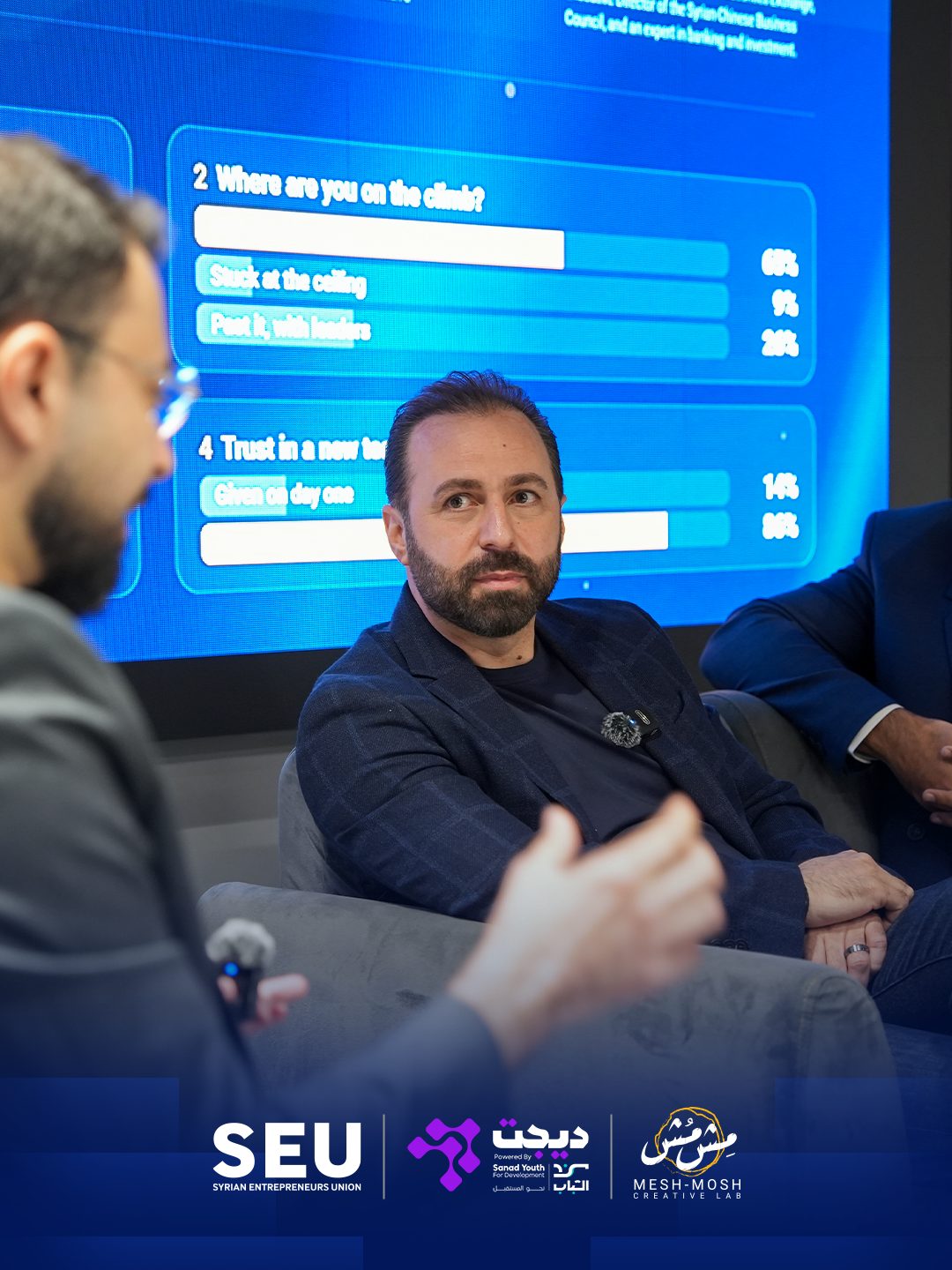
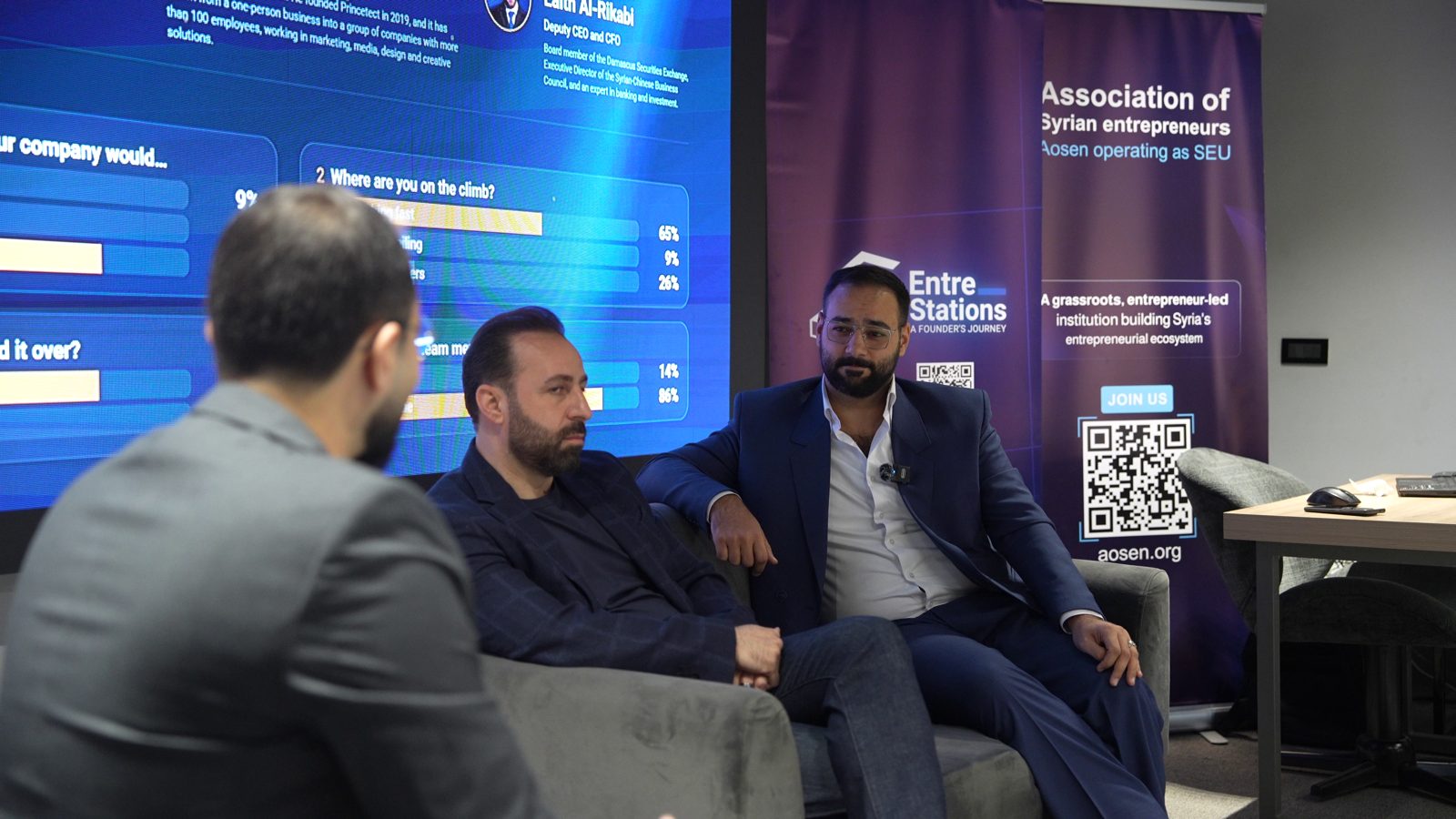
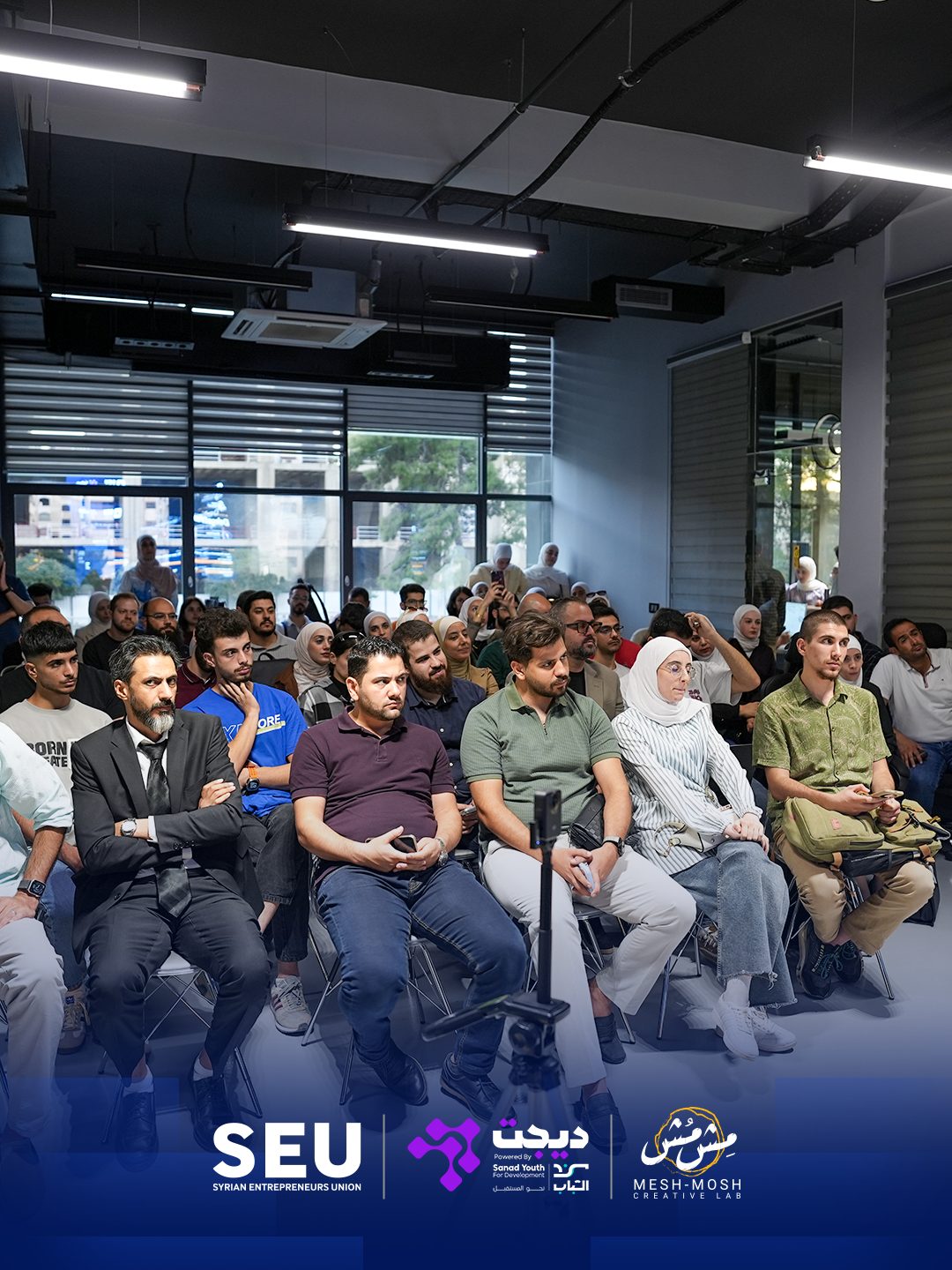
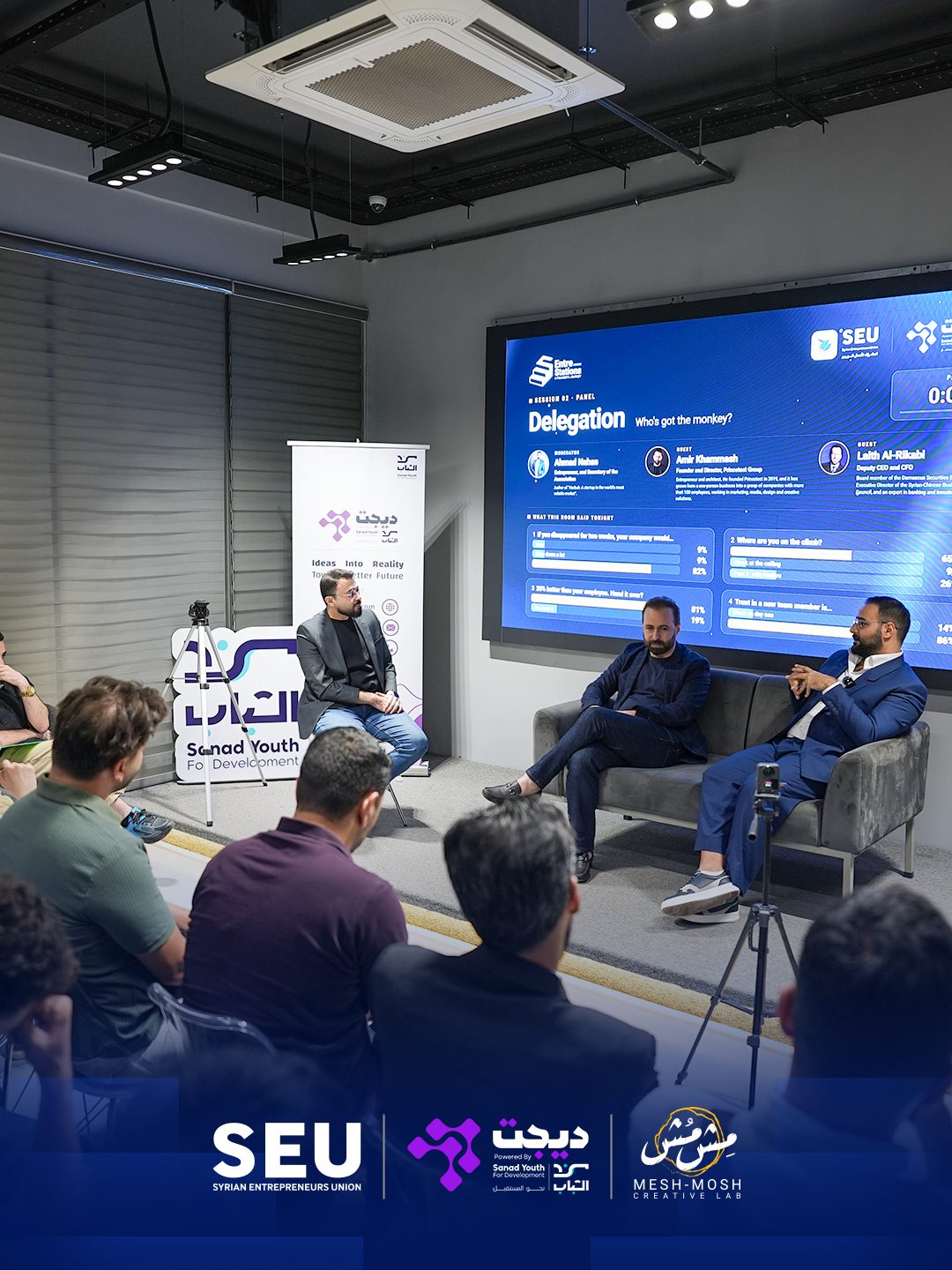
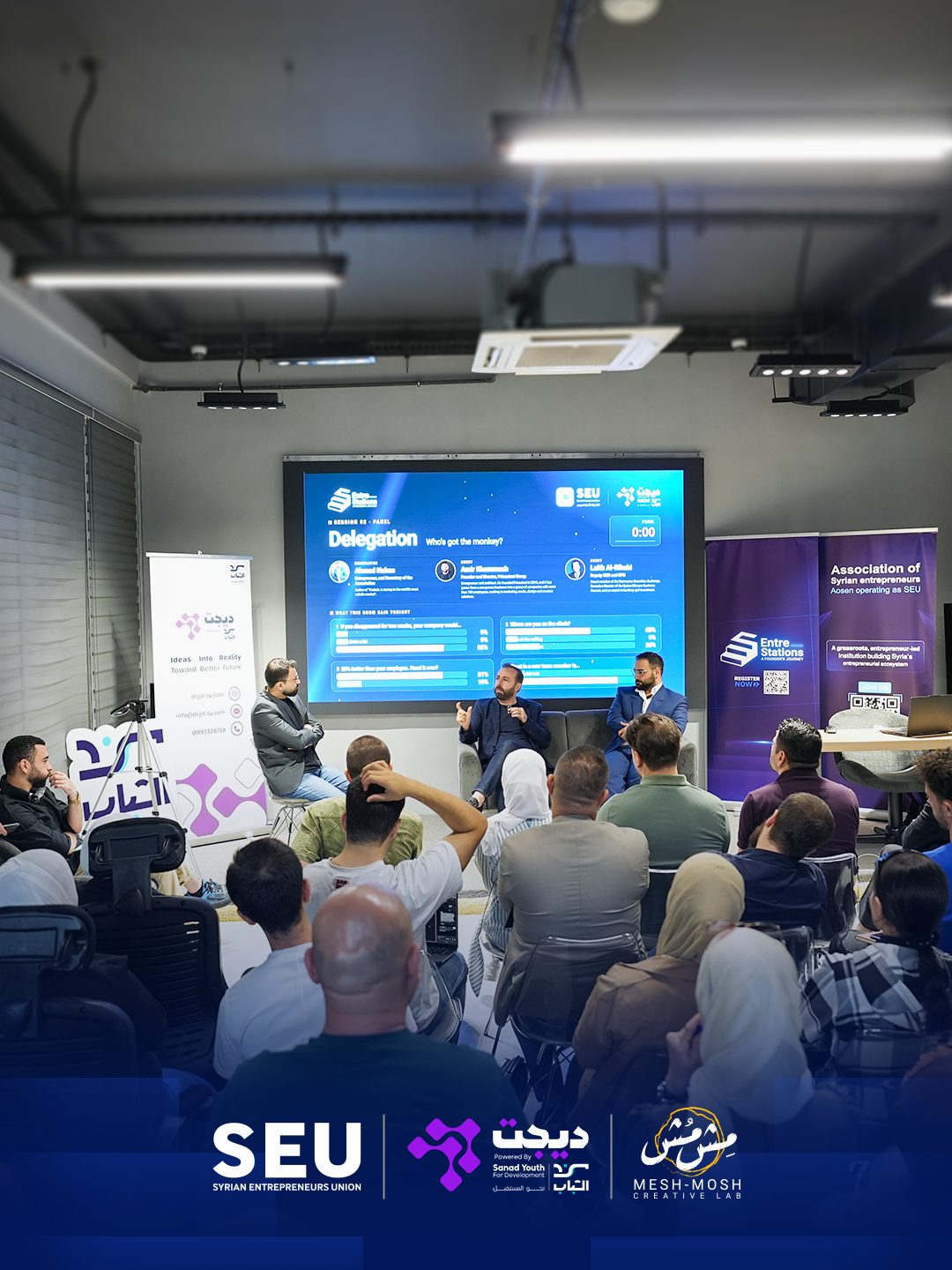
On Saturday 17 October 2026, the second EntreStations session brought together 62 people at DIGIT Center in Kafarsouseh, out of 119 who registered. The topic was delegation. Ahmad Nahas moderated two speakers: Amir Khammash, founder and director of Princetect Group, and Laith Al-Rikabi, Deputy CEO and CFO, and a board member of the Damascus Securities Exchange.
The session opened with a line every founder has said: "I don't have a single employee I can rely on." It ended with the conclusion that, in most cases, the problem is not the employee.
Ahmad Nahas opened with a well-known 1974 article, "Who's got the monkey?". The idea is simple: an employee walks into the manager's office with a problem, and walks out without it. By the end of the day the manager is carrying everyone's problems, and the whole team is waiting for his decision.
He then showed five levels of delegation, from an employee who only moves when told, to one who works alone and meets the manager once a week. The goal is that nobody in the team stays at the first two levels.
During the session the audience voted on four questions from their phones. The results showed on the screen right away, and the speakers discussed them.
Amir Khammash talked about the mindset of "never share the secrets of the trade", and said that people who share what they know learn more. He added that you cannot blame your team for something you never taught them, and that here the manager carries more responsibility than the employee. He said he wants people to know Princetect, not Amir, because the company has to outlive him.
Laith Al-Rikabi said everyone blames the employee, when the problem is often a manager who sees himself as faster and more accurate than everyone else. He gave the example of a skilled surgeon who becomes a hospital director: the day you founded your company, part of your job became managing, not doing everything yourself. He said the founder who knows the company matters more than he does is the one who can delegate.
At the end, Laith warned against micromanagement, and Amir spoke about starting out as an architect who delegated straight away what he did not know, such as finance. Laith and Ahmad stressed that a founder must know the company's numbers and ask for them.
One attendee asked when delegation turns into extra load on the employee. Laith said an ambitious employee is happy with responsibility, and if they are under pressure, they should delegate too. Delegation is what grows a company, not hiring one more person every time.
Another asked whether the person you delegate to must work your way. Laith said what matters is the result, and young people often find smarter solutions. He advised thanking them in front of everyone once the task is done.
81% said they would hand over a task they do 20% better than a team member (25 of 31 who answered).
86% said trust in a new team member is earned over time, not given on day one (19 of 22).
65% said they are still climbing fast, 26% are past the ceiling with leaders in their team, and 9% are stuck at the ceiling (23 answered).
These are live votes from the room, and the number of voters changed from question to question, so they show a direction, not an exact measure.
30 attendees rated the session. The overall score was 3.7 out of 5, the speakers 4.4, and how likely they are to recommend it 4.0. Organisation scored 3.3 and the venue 3.0.
The message is clear: the content and the speakers were the strong point, and the room and organisation were the weak point. The main comments: the room was too small for the number of people and some stood the whole time, the sound did not reach the back because two speakers shared one microphone, and there was no break in two hours.
Thank you to everyone who wrote honest feedback. We are taking it into account as we prepare the next sessions.
Delegation is not throwing a task at someone. It means handing over a clear result with the authority it needs, accepting early mistakes, and measuring the result, not the method. And if the founder is the obstacle, the fix starts with the founder.
 Speaker
Founder and Director, Princetect Group
Entrepreneur and architect. He founded Princetect in 2019, and it has grown from a one-person business into a group of companies with more than 100 employees, working in marketing, media, design and creative solutions.
 Speaker
Deputy CEO and CFO
Board member of the Damascus Securities Exchange, Executive Director of the Syrian-Chinese Business Council, and an expert in banking and investment.
 Moderator
Entrepreneur, and Secretary of the Association
Author of "Harbuk: A startup in the world's most volatile market".
All times are pm, Damascus time
At the start of any project, the founder does everything: selling, buying, answering customers, keeping the accounts. That is normal in the first months. But a growing project needs more than one person, and there comes a moment when the founder becomes the reason things are slow.
Delegation is not throwing a task at someone and forgetting it. It means handing someone a clear result, with the authority they need to reach it, while you stay responsible for following up. Which raises the question: is delegation without follow-up simply walking away? And if it is, how do you follow up without taking the work back?
Every way of delegating has a price. Some founders save their time and pay for mistakes they did not see in time. Others avoid mistakes and pay with their time and their team's growth.
At the EntreStations launch evening on 24 September 2026, the audience voted from their phones on questions across the five axes. People came first among the axes they need right now, and delegation was the clearest need inside it.
So we chose delegation for this session.
About these numbers: 41 people voted at an invitation-only evening, so they show a direction, not an exact measure. Read the launch coverage (Arabic)
Both speakers delegated well, but not in the same way. These are the two most common styles among founders:
You set a clear goal, leave the method to your team, and check in after a while.
You start with a small task, then a bigger one, with a clear way to follow up.
There is no single right answer. The question is which style fits your project today, and what it costs you.
Three situations every founder meets. Pick your answer, see how others answered, then compare it with what the speakers say in the session.
A weekly programme by the Syrian Entrepreneurs Union for founders at any stage. Every Saturday there is an in-person session at DIGIT Center on a real challenge, within five independent axes. Each person picks the axis that fits their project.
About our programmes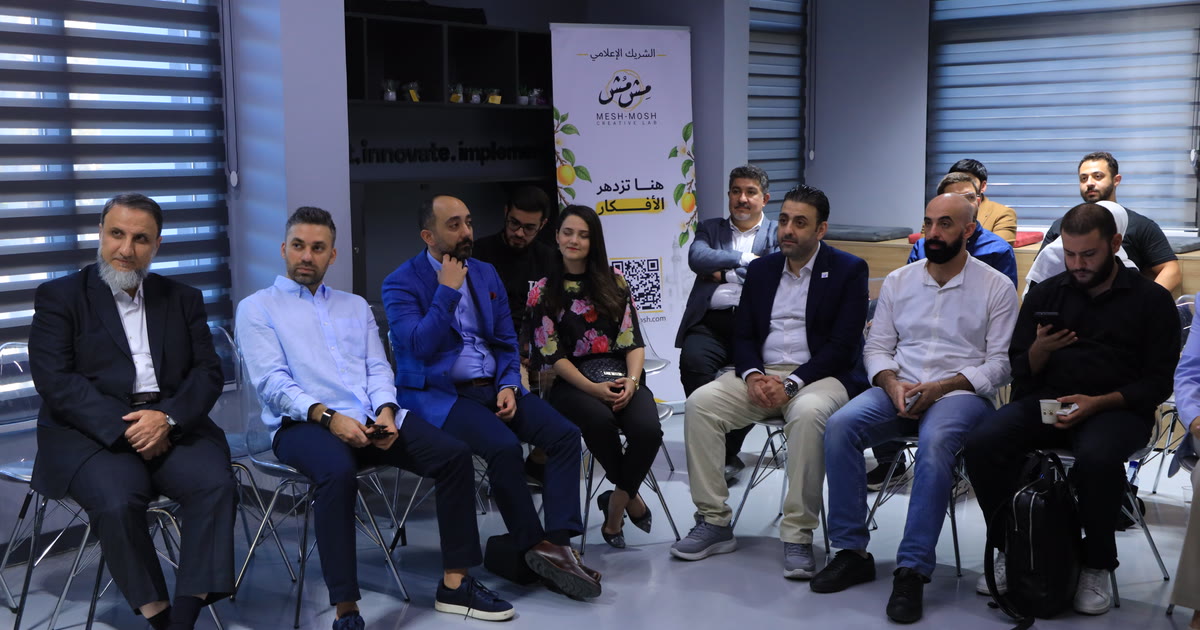 Coverage · 24 September 2026EntreStations launches in DamascusThe launch evening at DIGIT Center: the five axes, a panel on trust and company culture, and a live audience poll.
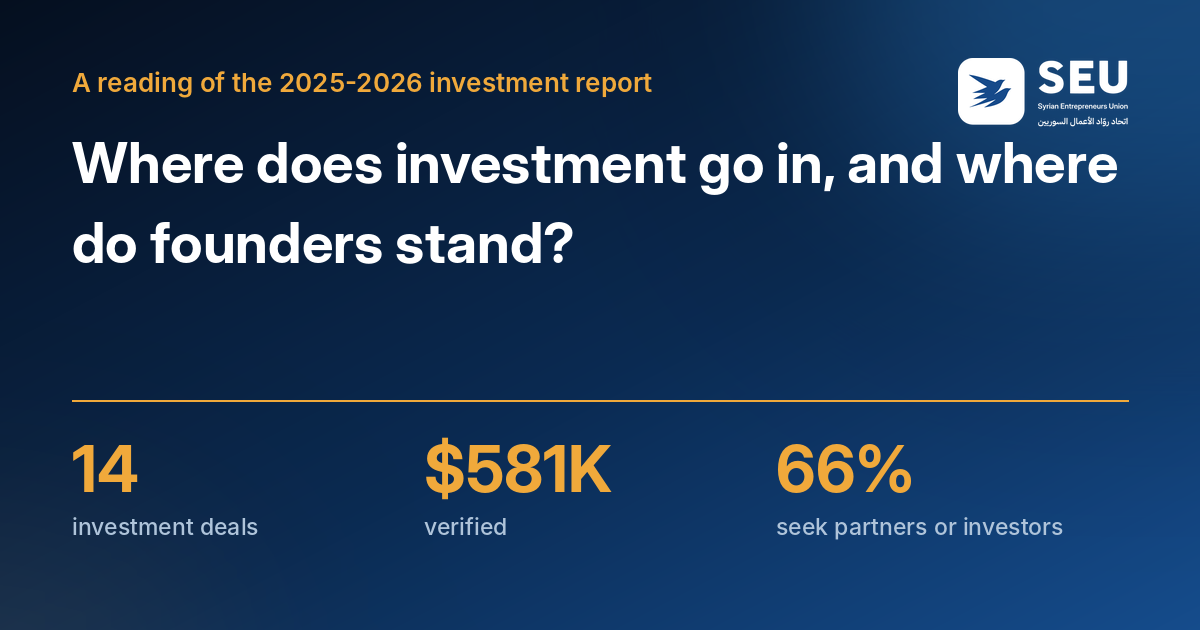 Article · October 2026Reading the Syrian startup investment reportA reading of the 2025-2026 Syrian startup investment report, with numbers from the SEU Observatory.
 Dialogues · OnlineEntrepreneurial Dialogues with regional foundersSessions with Salman Butt (Salla), Khaled Abulkasem (Alguru) and Abdulaziz Al-Nufaie (Zero to One).
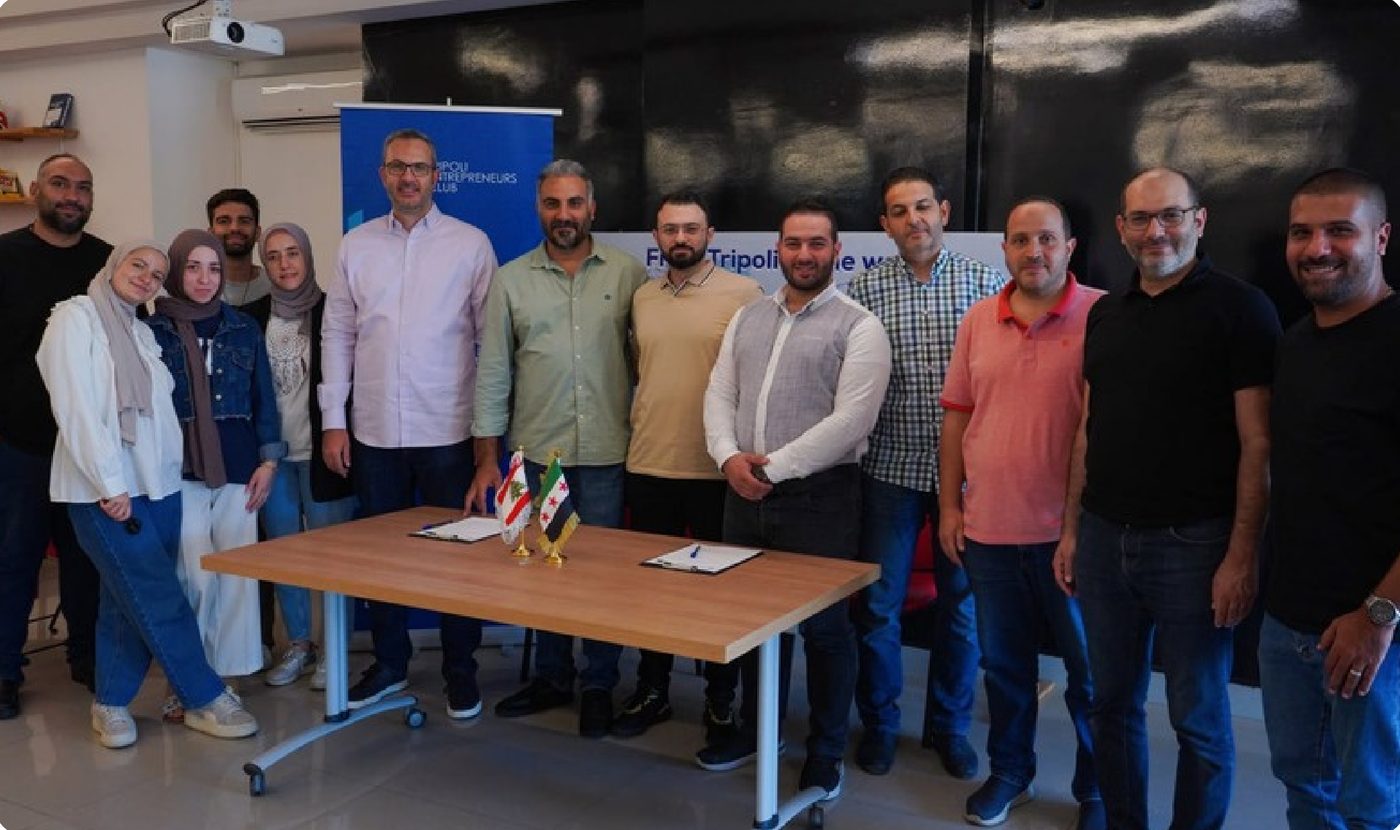 Session · 7 May 2025The Lebanese experience, with Tripoli Entrepreneurs ClubHow entrepreneur unions support projects and bring investment to startups.
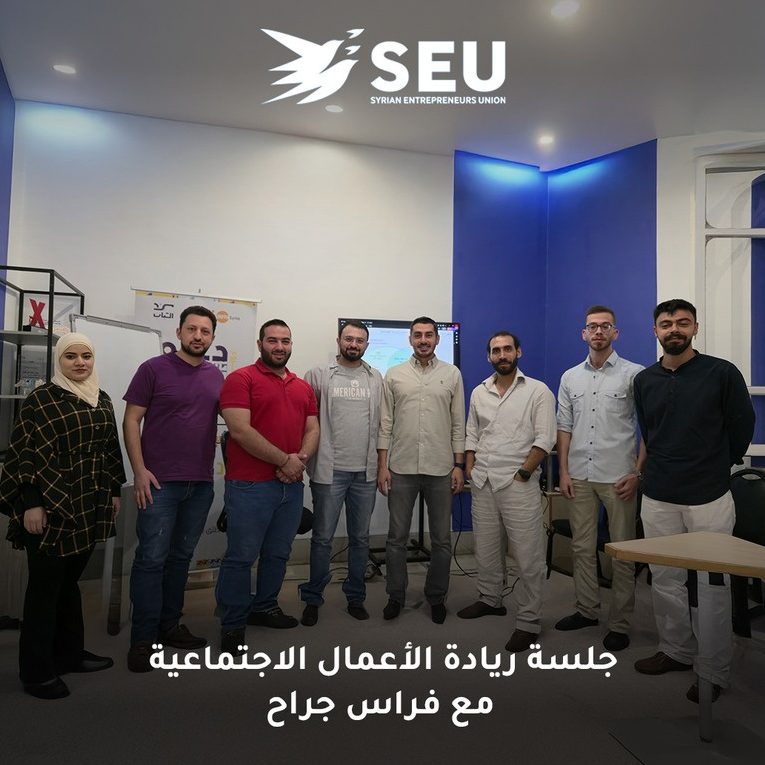 Workshop · In personSocial entrepreneurship with Firas Al-JarrahA workshop with an adviser to government bodies and non-profits.
Anyone who leads a team or is about to: founders, managers, and people building their first team.
A session costs 10 US dollars, but attendance is free during the programme's pilot phase until the end of 2026. Just register to get a QR entry ticket.
DIGIT Center, Kafr Souseh, Damascus. Saturday 17 October 2026, 4:00 to 6:00 pm. In person only.
With the "Book your seat" button on this page. Sign in with Google or your email and you get a QR ticket and a calendar invite.