Opportunity or necessity? What our data says about why Syrians start businesses
In short
- We asked members of the union what inspired them to start. Of 74 answers about motive, only 7% named money or income, and 7% wanting to leave a job. Most spoke of filling a gap in the market (30%), passion (28%) and making an impact (26%).
- Practice tells a different story: 76% of project owners in our Observatory sell through social media, only 2% through online marketplaces, and 80% say marketing and sales is their biggest challenge.
- In Jordan, more than eight in ten new entrepreneurs agree they started "to earn a living because jobs are scarce" (Global Entrepreneurship Monitor, 2025). The gap between us and them suggests the way we asked shaped the answer, not that Syrians are an exception.
- My takeaway: in Syria, necessity often does not mean "I could not find a job". It means "my job is not enough". Standard measures do not capture this easily.
- We will add the internationally used motive questions to the second edition of the Observatory in April 2027, so we can measure instead of guess.

named money or income as their main motive
named a market gap, passion or impact
sell through social media
started to earn a living because jobs are scarce
Source: membership form and Entrepreneurship Observatory (SEU, 2026), and Global Entrepreneurship Monitor (GEM, 2025)
Why does this question matter?
For years, researchers have split entrepreneurship into two kinds: opportunity entrepreneurship, when someone starts a business because they see a market need they can meet, and necessity entrepreneurship, when someone starts because they have no other way to earn a living.
The split may sound academic, but it changes everything about how we support people. An opportunity founder usually needs finance, a network and a wider market. A necessity founder first needs a steady income, and simple tools that turn a small activity into a business that can last. If we get the diagnosis wrong, we offer accelerator programmes to people looking for their daily bread, or "from idea to project" workshops to people who passed that stage long ago.
So I decided to answer the question from our own data, not from impressions. We have three sources: what people said when we asked them, what they do in their businesses, and what they discuss among themselves.
What did members say when we asked about their motives?
In the union's first membership form (April and May 2026) we asked an open question: what inspired you to enter tech entrepreneurship? I read every answer and sorted each one by its main motive. Of 91 answers, 74 were actually about motive. The rest were empty or about the union itself.
Main motive for starting
74 answers from the first membership form, April and May 2026. Main motive only for each answer.
The picture is clear: people tell a story of opportunity. The story of someone who saw a problem and decided to solve it, or who loved technology and built something with it.
But one answer brought me back down to earth. A member wrote:
"I didn't really get into it. I was just looking for some extra money. No need to blow things up."A member, from the membership form (translated from Arabic)
That answer raises a fair question: are we hearing the real motives, or the story we think suits us?
What does practice say?
In the first edition of the Entrepreneurship Observatory we read data on 795 people from the entrepreneurial community, 338 of them with a running business, a prototype or an idea they are actively building. These figures speak to our question:
- 76% sell through social media, and only 2% through online marketplaces.
- 80% say their biggest challenge is better marketing and sales, and 78% reaching more customers.
- 66% are looking for partners or investors.
And in other data we collected over the same period:
- Among those who stated their work status, about 36% described themselves as employees, and 7% as looking for work. A large part of the entrepreneurial community holds a job alongside its business or idea.
- In an e-commerce workshop, 23% of those who registered said they were learning to get a job in the field, not to launch a business.
These are not the features of opportunity entrepreneurship as textbooks describe it. Selling over WhatsApp and Instagram, a business on the side of a job, learning to get hired: all of these look more like strategies for survival and for adding a second income.
What do members discuss among themselves?
The third source is the WhatsApp group "Entrepreneurs Gathering", with about 15,000 messages between January 2025 and October 2026. I read the group looking for talk about motives, and found that members rarely talk about why they started. Almost all of the discussion is about what holds them back: licensing apps and commercial registration, e-payments, receiving money from abroad, and funding.
Still, necessity shows up between the lines. One member wrote about salaries:
"We're all afraid to even say what our salary is, even though it isn't enough for anything."A member, from the discussion group (translated from Syrian Arabic)
Another wrote about factories closing and workers offered half pay for half hours, and about a market "struggling to find its daily bread, without extras".
There is also a frustrated voice from experience. A member who has worked in the sector since 2018 wrote:
"Compare the smallest food shop with the best, most important app in the country. The food shop does better than the app's owner."A member, from the discussion group (translated from Syrian Arabic)
And a founder's advice spread in the group: entrepreneurship is "a life decision", not a fast road to wealth, and he does not advise leaving a stable job. That is not advice for someone who started because they saw a clear opportunity. It is advice for someone who weighs, every day, the safety of a salary against the risk of a business.
| What they said | What they do | What they discuss |
|---|---|---|
| Market gap, passion, impact | Selling through social media, a business alongside a job | Licensing, e-payments, money transfers, funding |
| A story of opportunity | A practice of survival | Barriers of infrastructure |
What does the picture look like in similar countries?
The global question changed
For years the Global Entrepreneurship Monitor (GEM) asked: did you start because you saw an opportunity, or because you had no better choice for work? But this either-or split stopped being enough, because many people hold both motives at once. So since its 2019/2020 report, GEM asks about four motives, and people can agree with more than one: to make a difference in the world, to build great wealth or a very high income, to continue a family tradition, and "to earn a living because jobs are scarce". In most of the 50 economies surveyed that year, more than half of new entrepreneurs agreed with the last one.
Our neighbours
- Jordan: in 2025, more than eight in ten new entrepreneurs agreed they started to earn a living because jobs are scarce. In the 2023/2024 national report, only 20 to 27% named "making a difference in the world", and Jordan was highest on earning a living compared with Qatar, Saudi Arabia and Oman.
- Saudi Arabia: in 2025, more than four in five new entrepreneurs agreed with each of the two motives, earning a living and building wealth, even in a rich economy.
- Egypt: in 2025, four in five people starting a business agreed with one of the two material motives: earning a living or building wealth.
Compare these numbers with our 7%. The gap is too large to be real. When the motive is asked as "what inspired you?" in a membership form for a tech union, people choose the nicer story. When the same person is asked whether they agree they started because jobs are scarce, the answer is usually yes.
Post-conflict economies
- In a study of 91 countries between 2001 and 2018, Naudé, Amorós and Brück (2023) found that necessity-driven start-up activity in countries in conflict is close to double the rate in other countries (4.75% against 2.46% of adults). They also found that entrepreneurship holds up better where unemployment is lower and finance is easier to get.
- In Bosnia and Herzegovina after the war, a World Bank and University of Glasgow study found that wealthier households were better able to start businesses that lasted and created jobs, that a bank relationship was linked to a business surviving, and that micro-credit helped people in informal work become successful entrepreneurs.
- In Kosovo, Williams and Vorley (2017) found that the break with old institutions opened the door to entrepreneurship, but most activity stayed small and local, with a limited effect on economic growth.
When members of our group discussed in January 2025 which experiences we should learn from, they named Jordan, because it set up a government body to support entrepreneurs, and Rwanda, because it "went through conditions very similar to ours". The members were looking for this comparison before we wrote it.
What does this mean for us?
- 01
Our entrepreneurship is most likely a mix, with more necessity than we admit
Evidence from practice, from our discussions and from similar countries points the same way, even if the stories we tell about ourselves say otherwise.
- 02
Necessity here has its own shape
In the standard definition, a necessity entrepreneur is someone who could not find a job. In Syria today many people have a job, but it is not enough. The business becomes a second income, run in the evening and over the phone. Measures designed for different labour markets may not show this clearly.
- 03
The motive is not the problem
Bosnia, Kosovo and the comparative studies say that what turns a necessity business into a productive one is finance, networks and an environment that allows growth, not a noble motive. A business started because the salary is not enough can become a real company, if it finds the road.
That is the distance we work on as a union: we connect founders with investors and partners, we take their voice on licensing and e-payments to government, and in the EntreStations programme we offer practical tools for marketing, sales and management, because that is what most business owners need today.
What will we measure in April 2027?
I do not want to settle the answer by guessing. So the second edition of the Observatory will add GEM's four motive questions, in the same wording, so we can compare ourselves fairly with Jordan, Saudi Arabia and Egypt. We will add two more questions: do you work in another job alongside your business? And if you were offered a job paying what your business earns, would you take it?
If your business is part of this story, completing your profile on the union's website makes the next edition more accurate.
References and method
Entrepreneurship Observatory
Data from 338 entrepreneurs with active ventures: how they sell, what holds them back, and what they need.
Open the Observatory → Earlier insightWhere does investment go in, and where do founders stand?
A reading of the Syrian startup investment report 2025-2026, set against Observatory data.
Read the article → Global referenceGlobal Entrepreneurship Monitor (GEM)
The largest international survey of entrepreneurship, source of the Jordan, Saudi Arabia and Egypt figures here.
gemconsortium.org →- Naudé, W., Amorós, J. E., & Brück, T. (2023). State-Based Conflict and Entrepreneurship: Empirical Evidence. IZA Discussion Paper No. 15946. docs.iza.org/dp15946.pdf
- Global Entrepreneurship Monitor (2020). GEM 2019/2020 Global Report: Entrepreneurs worldwide motivated to make a difference. gemconsortium.org
- Global Entrepreneurship Monitor. Entrepreneurship in Jordan (2025). gemconsortium.org/economy-profiles/jordan
- GEM Jordan National Team (2024). GEM Jordan National Report 2023/2024. giz.de
- Global Entrepreneurship Monitor. Entrepreneurship in Saudi Arabia (2025). gemconsortium.org/economy-profiles/saudi-arabia-2
- Global Entrepreneurship Monitor. Entrepreneurship in Egypt (2025). gemconsortium.org/country-profile/58
- Demirgüç-Kunt, A., Klapper, L., & Panos, G. (2011). Entrepreneurship in post-conflict transition. Economics of Transition, 19(1), 27-78. eprints.gla.ac.uk/96171
- Williams, N., & Vorley, T. (2017). Fostering productive entrepreneurship in post-conflict economies: the importance of institutional alignment. Entrepreneurship & Regional Development, 29(5-6). eprints.whiterose.ac.uk/112244
- Association of Syrian Entrepreneurs (2026). Entrepreneurship Observatory, Edition 1. aosen.org/en/observatory
About these numbers: motive figures come from the union's first membership form (91 answers, 4 April to 19 May 2026). We sorted each answer by hand by its main motive, and left out 17 answers that were empty or not about motive, leaving 74. Sorting open text is a judgment call, and another reader might place some answers differently. Practice figures come from the first edition of the Entrepreneurship Observatory (October 2026) and from data on 795 people who engaged with the union and its partners between January 2025 and May 2026. The share of employees is out of those who stated their work status (239 people), and the share learning for a job is out of 96 people registered for an e-commerce workshop. Discussions come from the WhatsApp group "Entrepreneurs Gathering" between January 2025 and October 2026; we searched it for specific topics and quote members without names, translated from Arabic. This is data on people who engaged with the union, not a national survey, and it leans towards Damascus and towards tech and trade ventures. The other countries' figures come from nationally representative surveys, so the comparison is a guide, not a statistical test. For transparency: the author is the association's Secretary General and a member of the discussion group quoted here.
Frequently asked questions
Short answers on why entrepreneurs in Syria start.
Is entrepreneurship in Syria driven by opportunity or necessity?
No national survey answers this yet. In our data (2026), only 7% named money as their main motive, but practice, such as selling through social media and running a business alongside a job, suggests necessity plays a bigger role than the answers show.
What is the difference between opportunity and necessity entrepreneurship?
Opportunity entrepreneurship starts when someone sees a market need they can meet. Necessity entrepreneurship starts when someone has no better way to earn a living. Since 2019, the Global Entrepreneurship Monitor measures four motives that can be combined, instead of this either-or split.
How many entrepreneurs in Arab countries start out of need?
In 2025, more than eight in ten new entrepreneurs in Jordan agreed they started to earn a living because jobs are scarce, and more than four in five in Saudi Arabia, according to the Global Entrepreneurship Monitor.
Is necessity entrepreneurship higher in conflict and post-conflict countries?
Yes, according to comparative research. A study of 91 countries found necessity-driven start-up activity in countries in conflict is close to double the rate elsewhere, and that entrepreneurship holds up better where finance is available and unemployment is lower.
What does a necessity entrepreneur need to grow a productive business?
Evidence from Bosnia and Herzegovina and Kosovo points to finance, a bank relationship, networks and access to wider markets as what turns a survival business into one that grows and creates jobs.
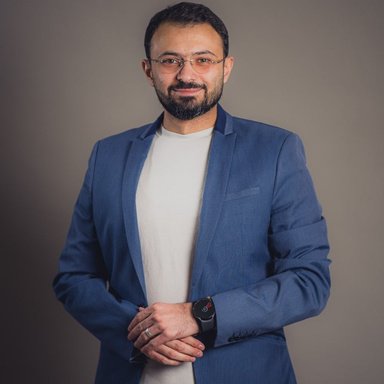
Ahmad Nahas
Secretary General of the Association of Syrian Entrepreneurs and co-founder of the agency Mesh-Mosh. He founded Harbuk, Syria's first integrated e-commerce platform, and documented the experience in his book Harbuk: A startup in the world's most volatile market.
More about the author